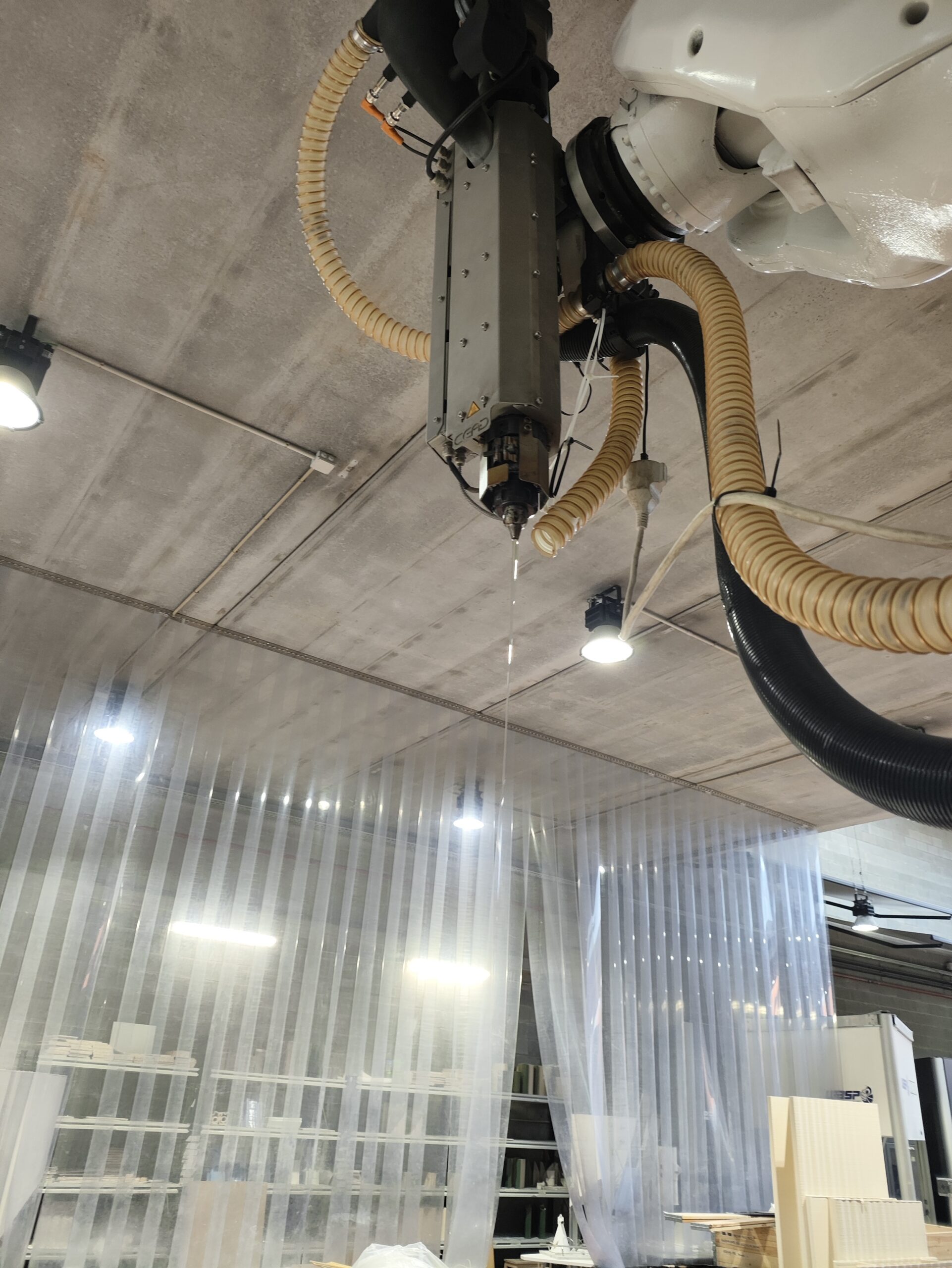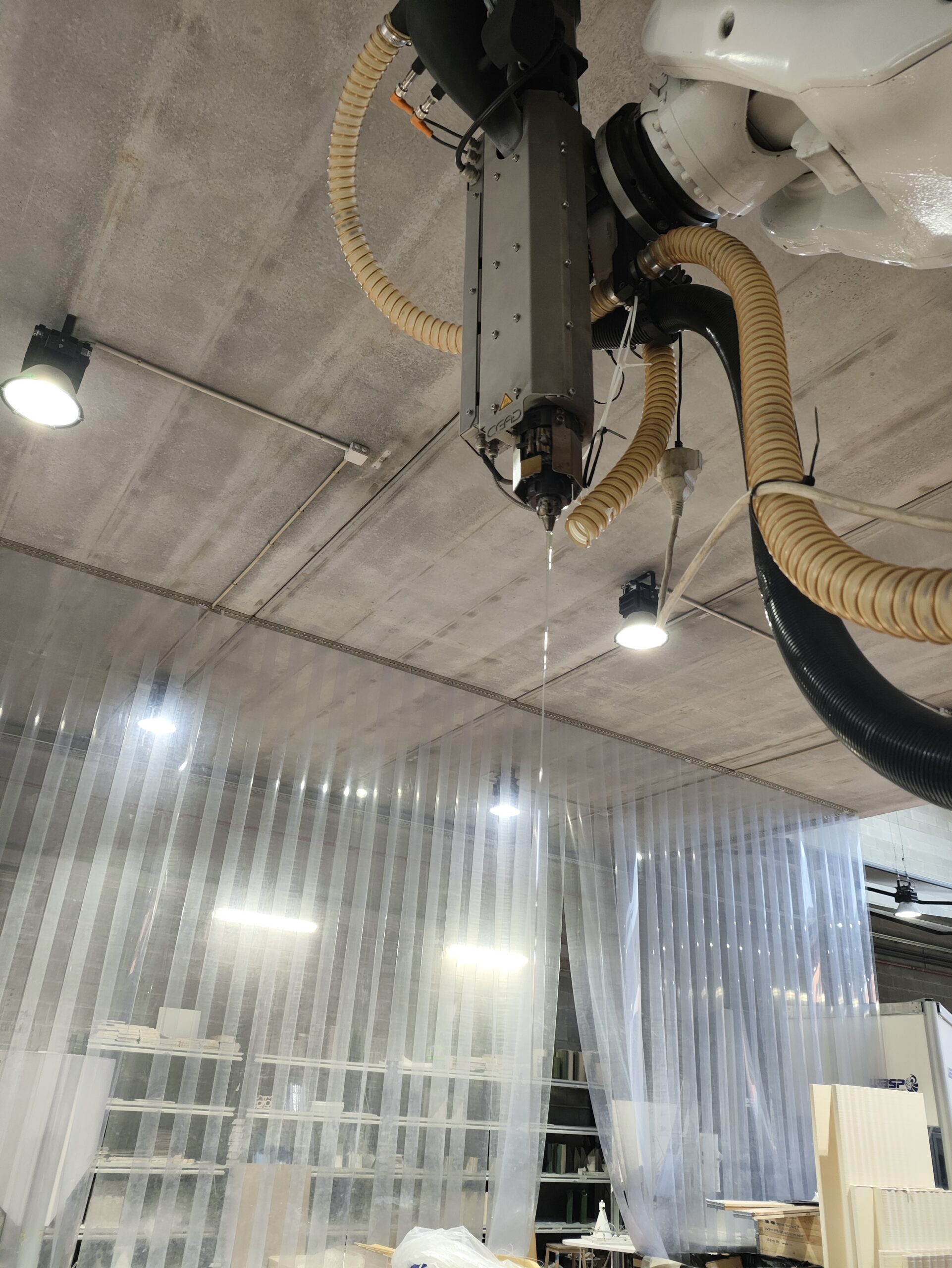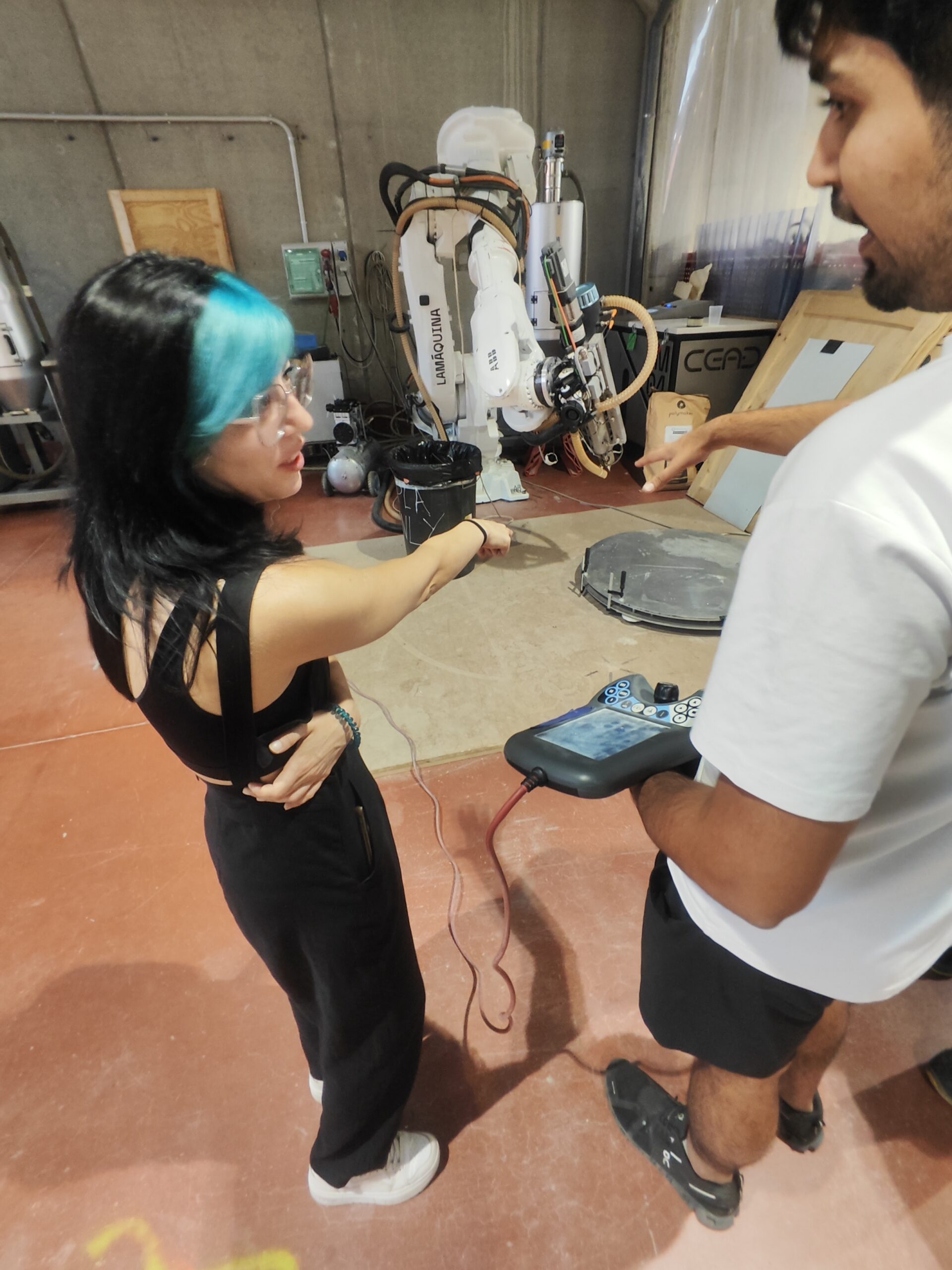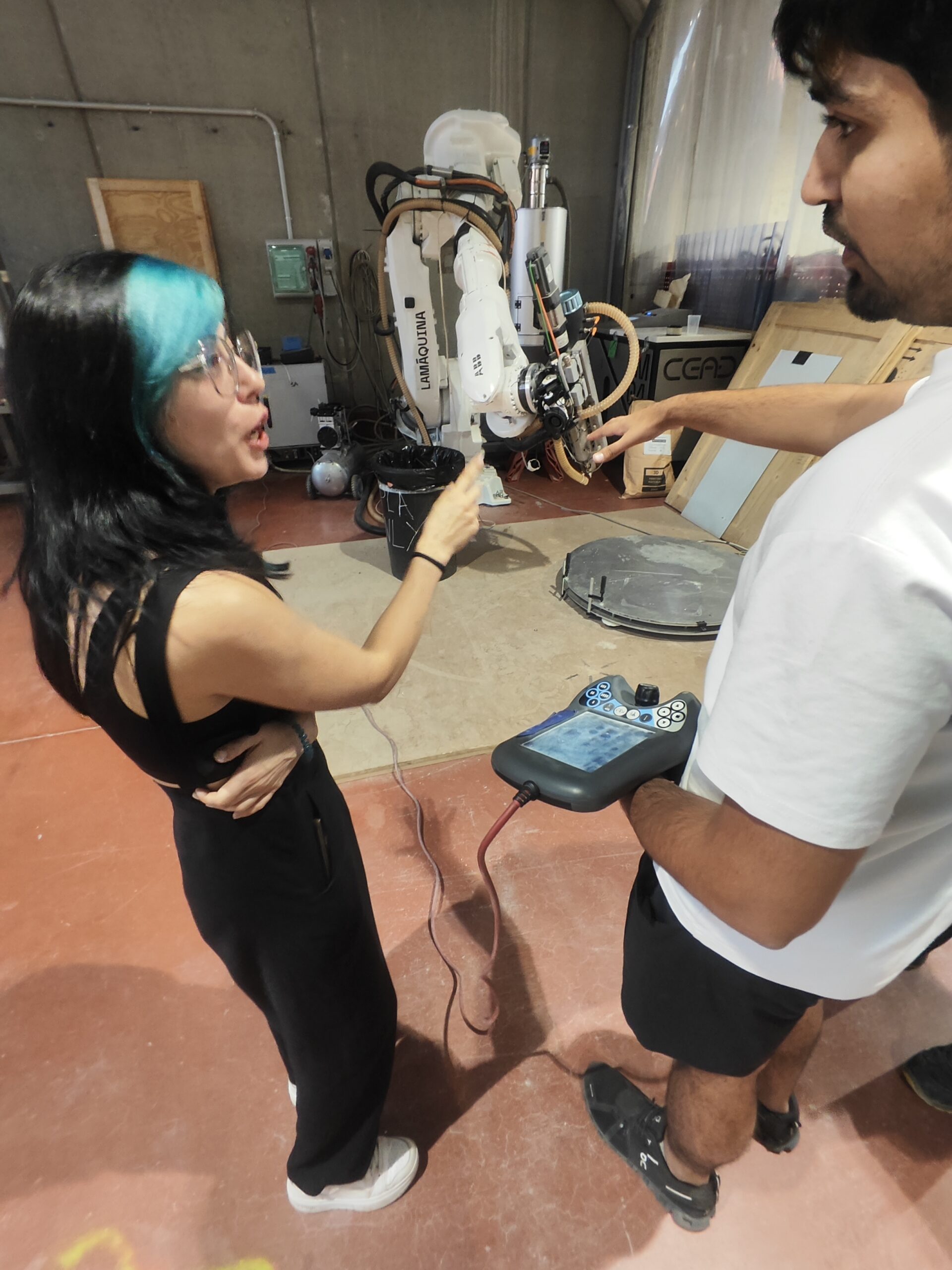
FabLab Frosinone is continuing its European journey in digital fabrication and large-format robotic 3D printing, creating a direct connection between training, experimentation and the transfer of technical skills
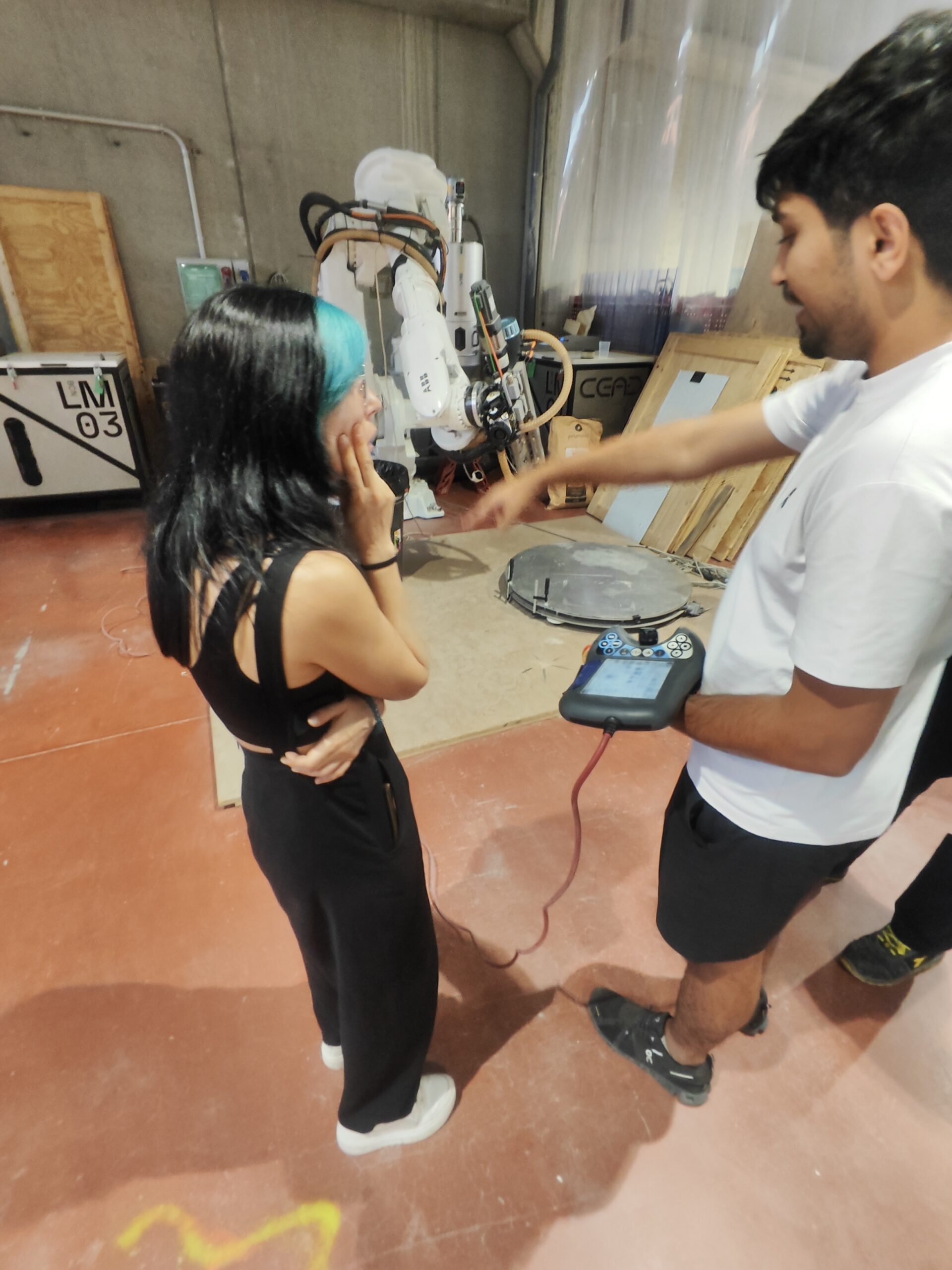
The journey began in Barcelona at LaMáquina, where we worked directly with robotic additive manufacturing systems based on pellet extrusion.
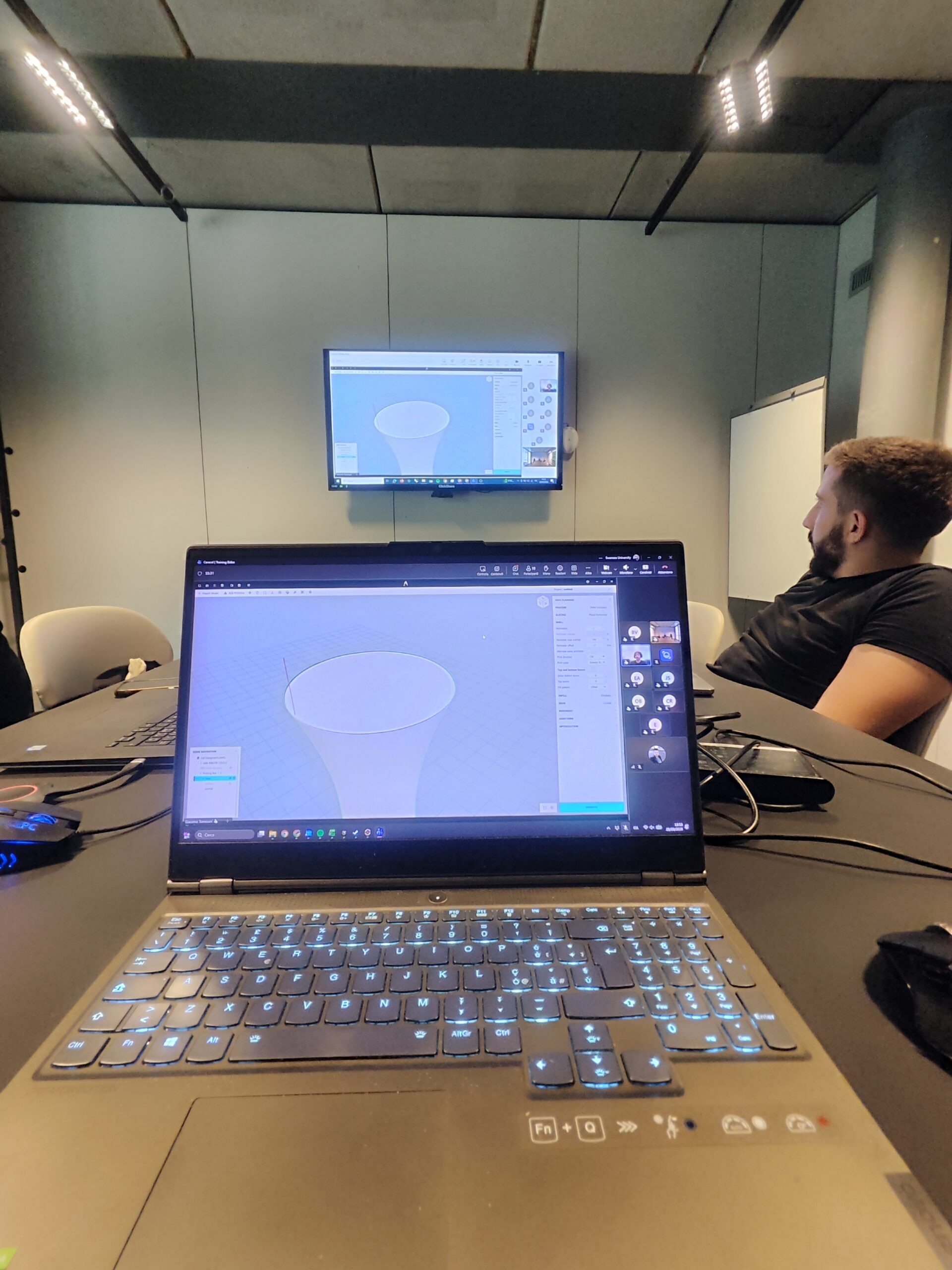
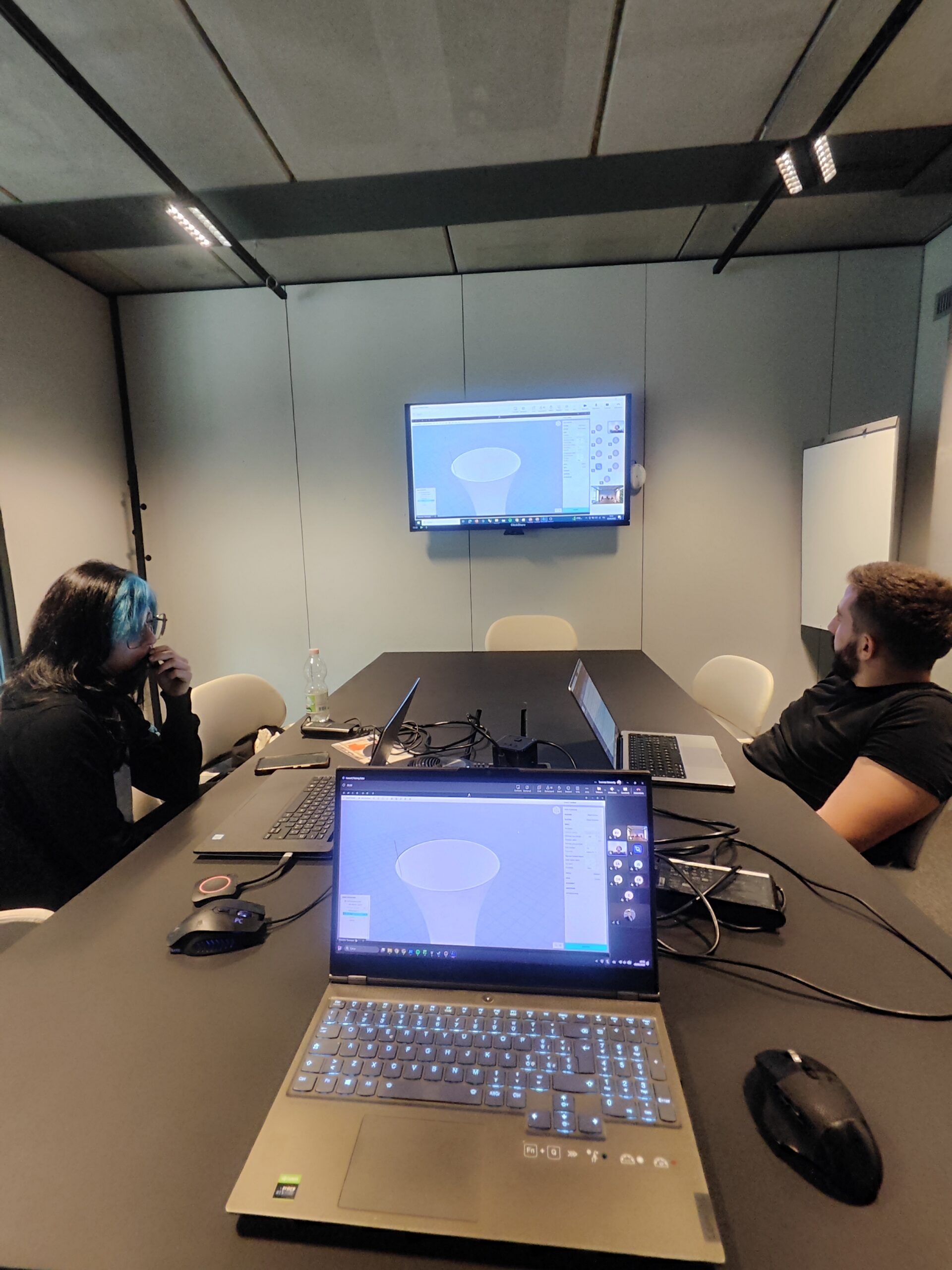
During the mobility, we focused on the main operational aspects of large-format 3D printing: model preparation, toolpath generation, G-code, extrusion parameters, robotic cell calibration and the relationship between the digital geometry and the final physical result.
The objective was not simply to observe the technology, but to understand the complete workflow and acquire skills that could later be transferred into FabLab Frosinone’s educational and experimental activities.
A few weeks later, those skills were tested in a completely different environment.
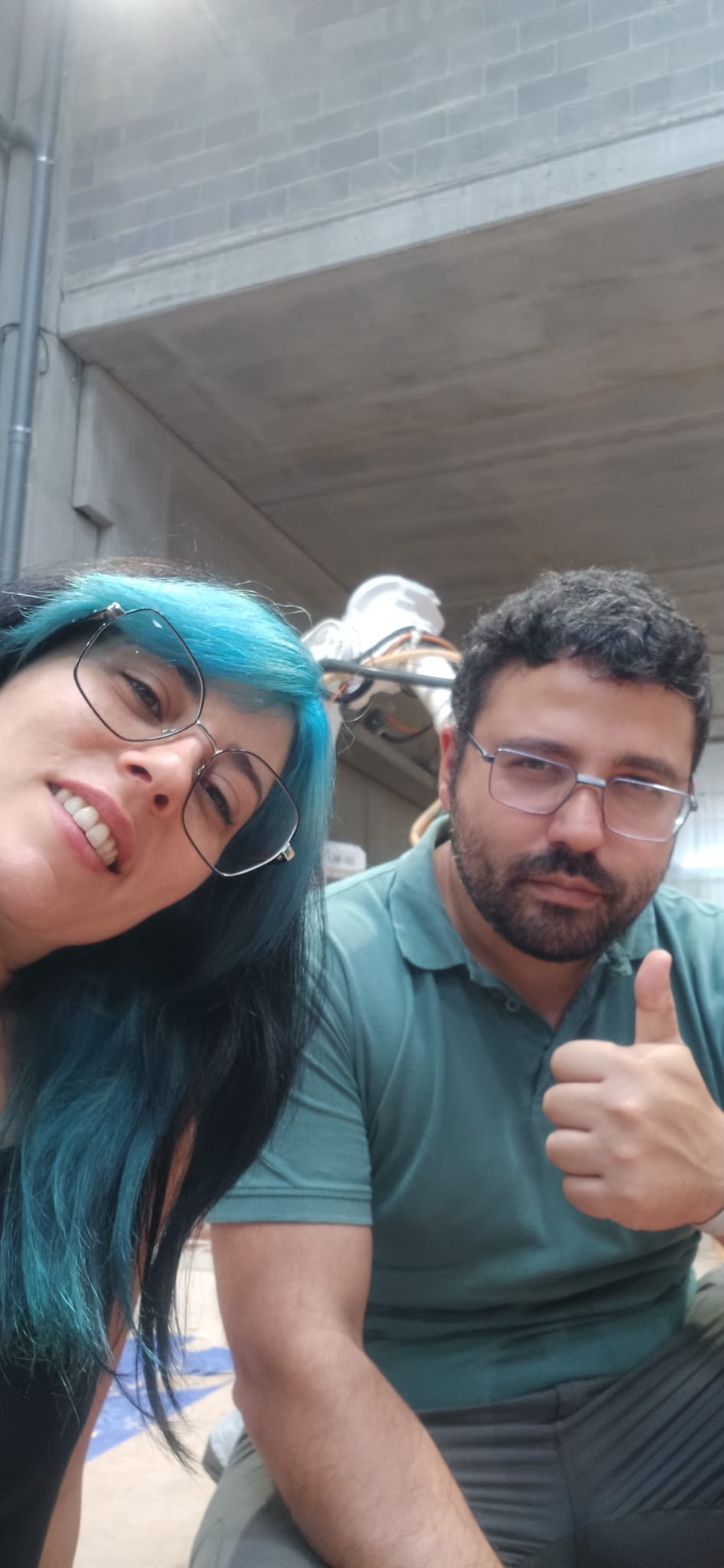
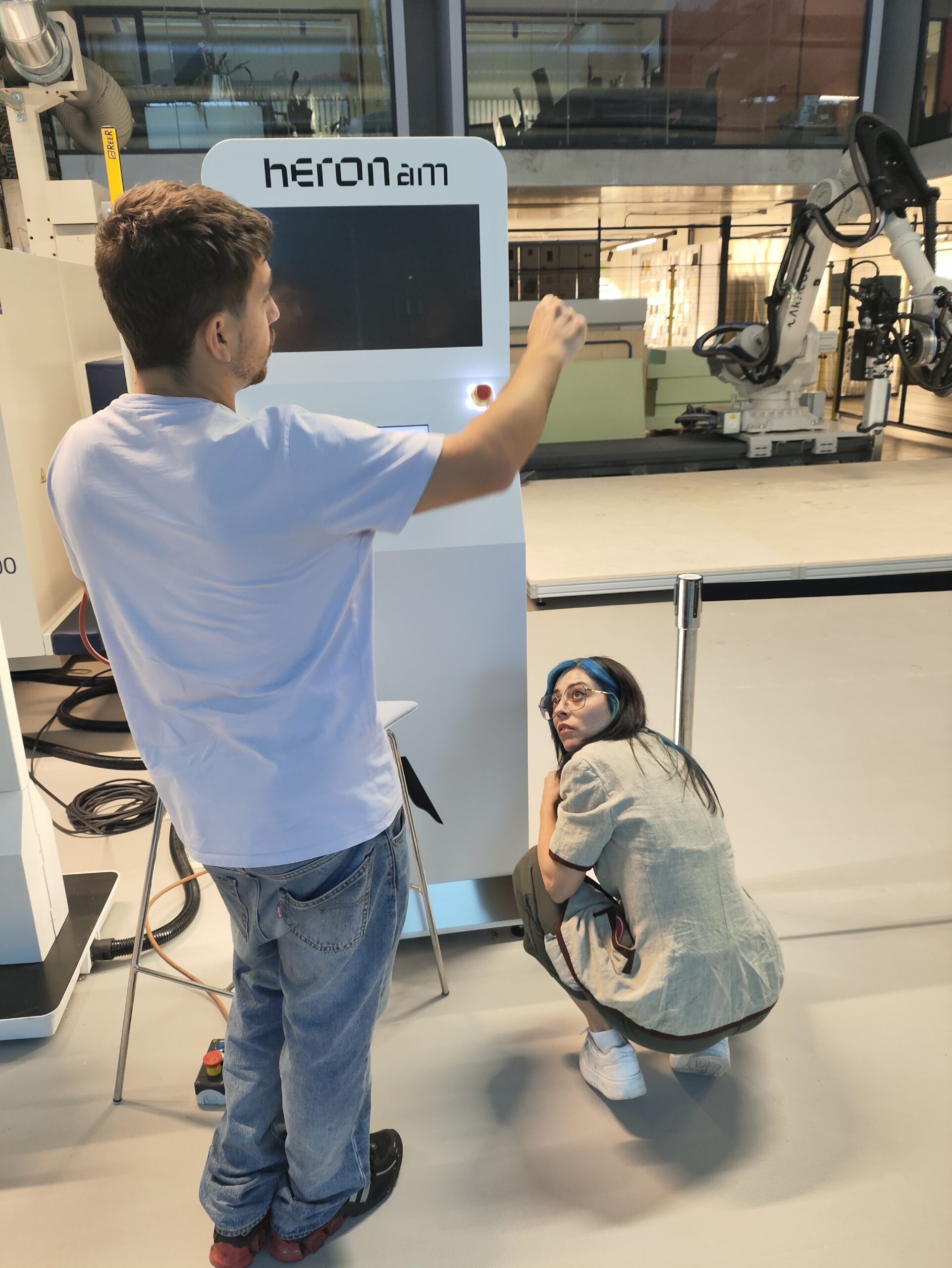
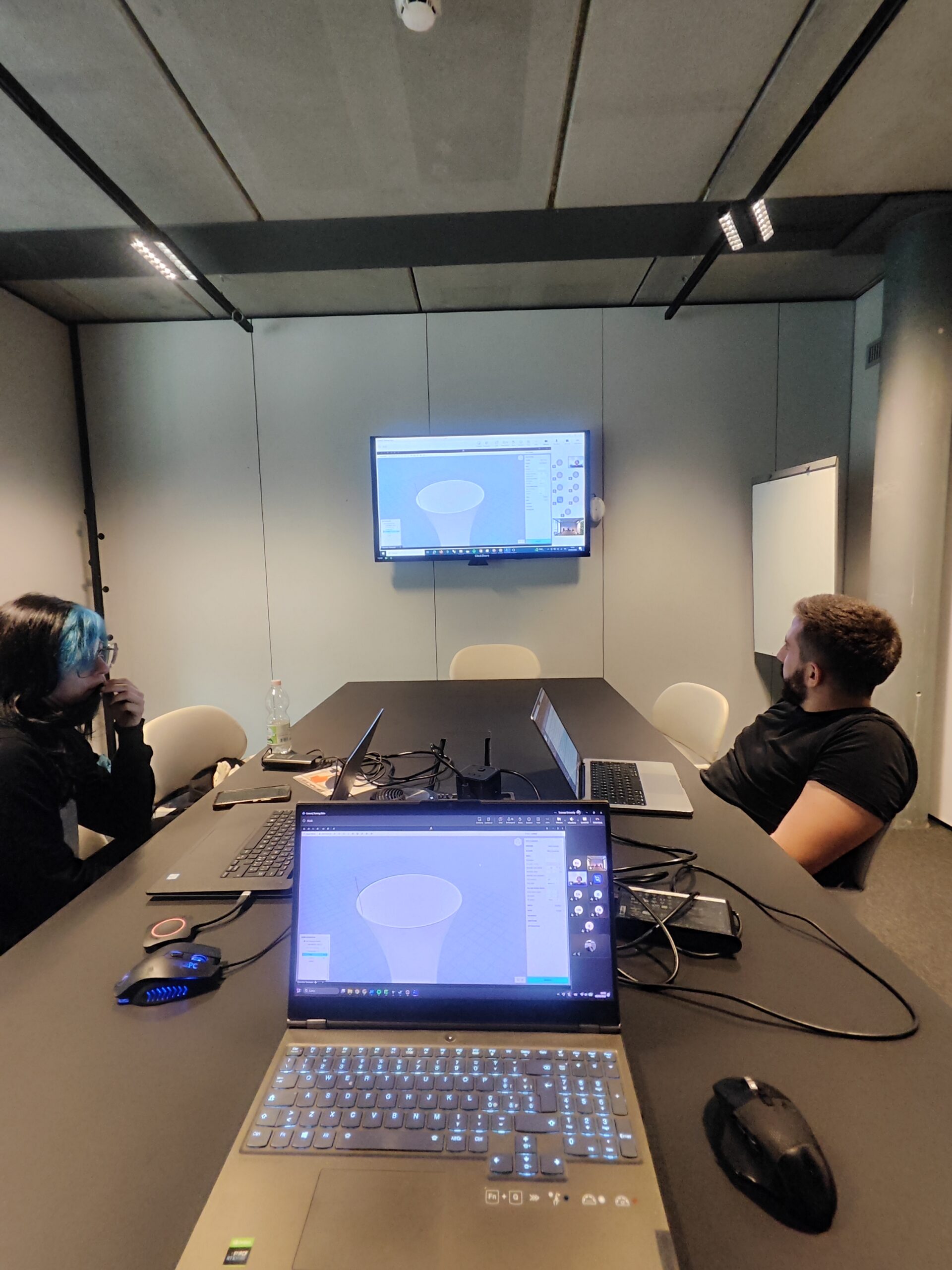
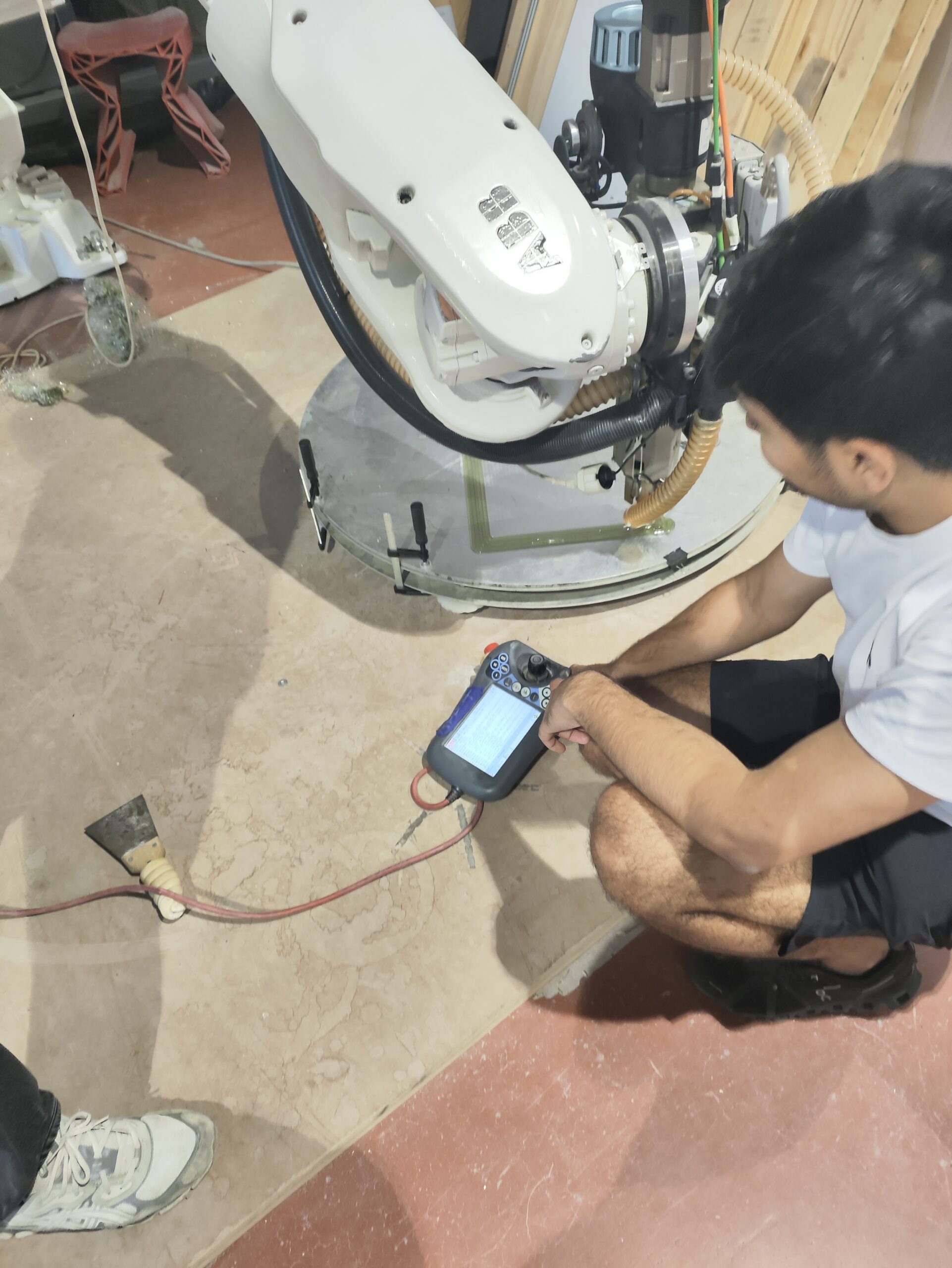
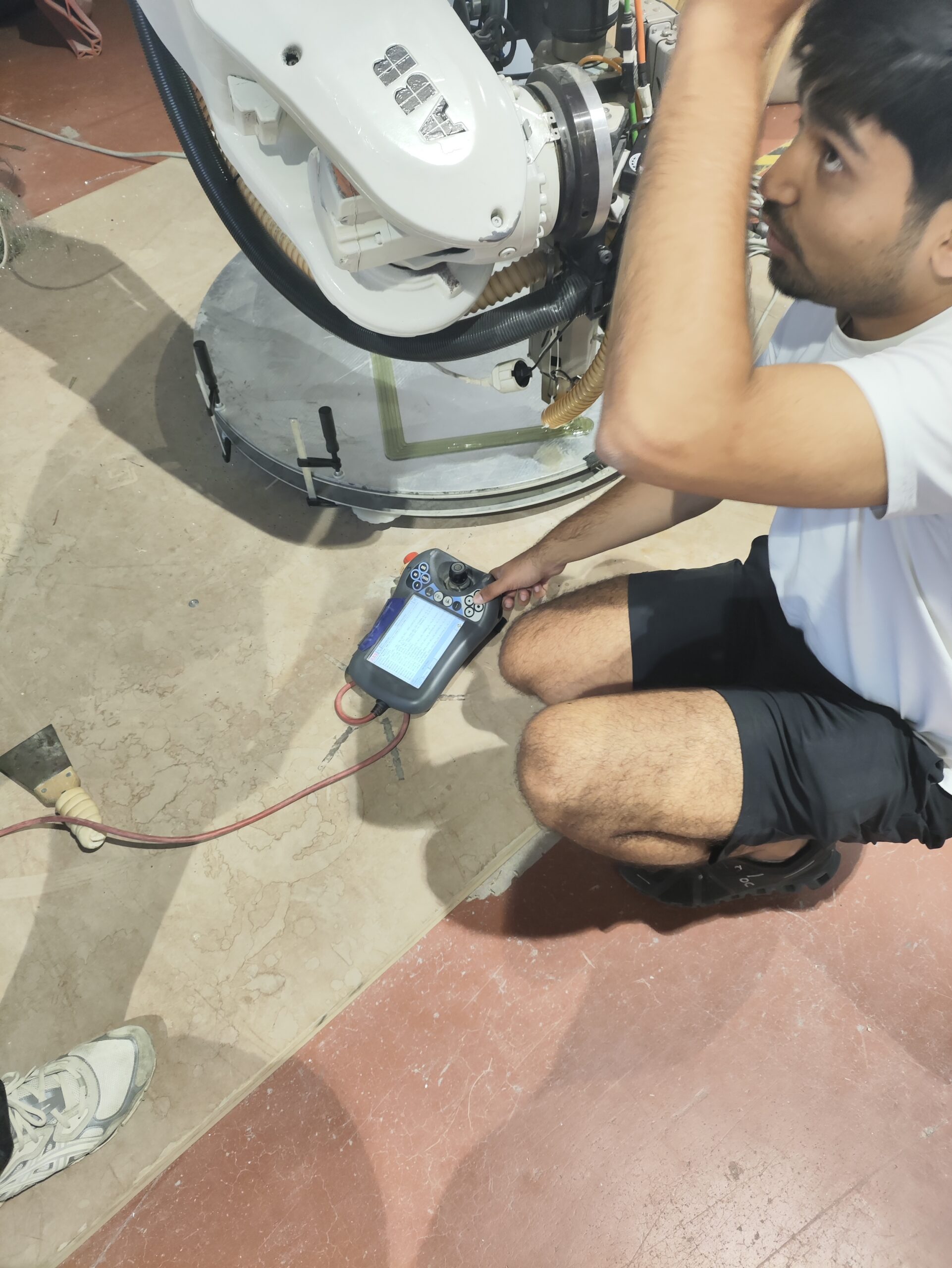
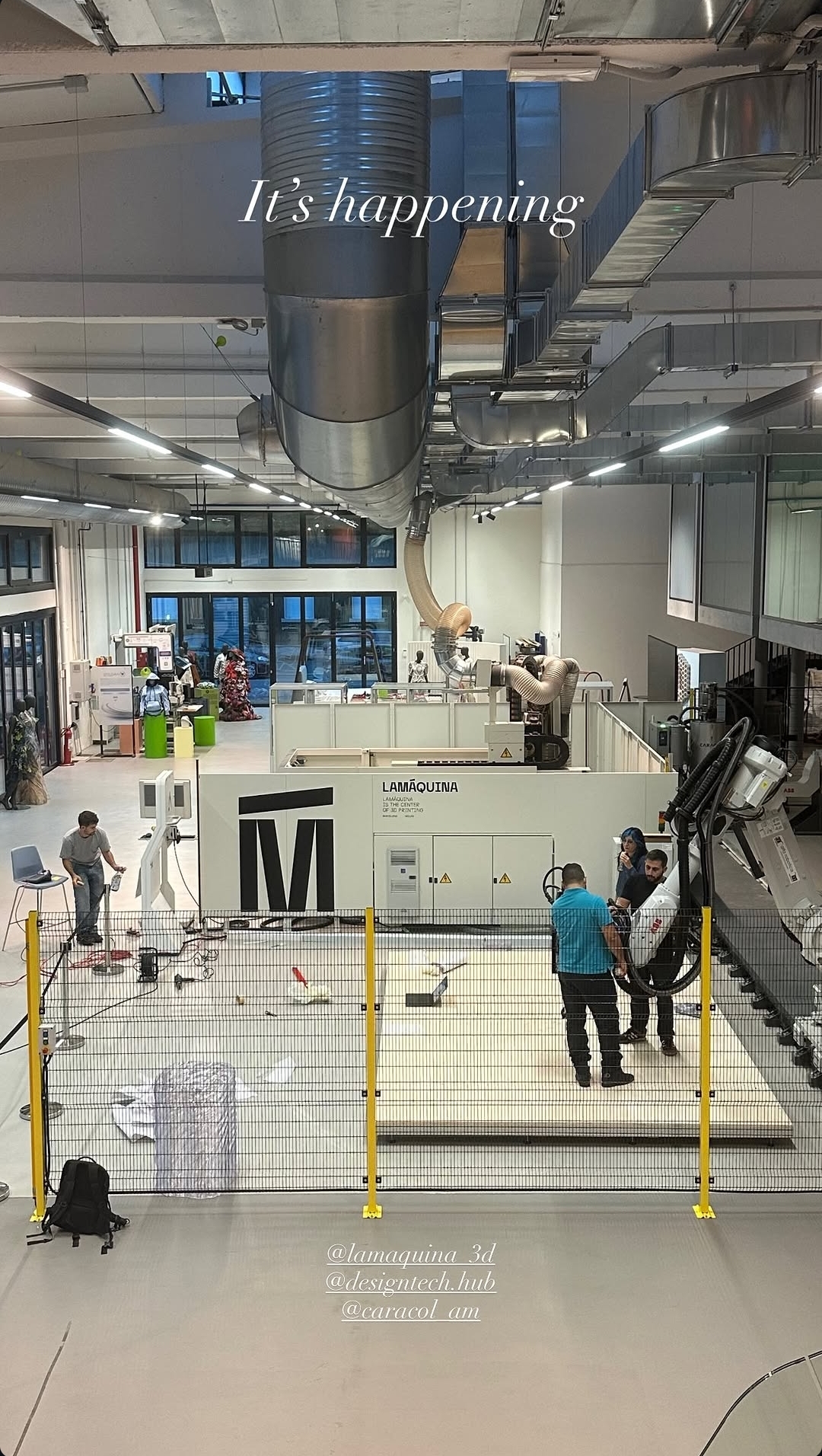
In Milan, at CoFactory – Designtech, we had the opportunity to work directly on an industrial ABB robotic cell equipped with a Caracol extrusion system for large-format 3D printing.
The collaboration with Designtech also represented an important step in terms of professional trust.
FabLab Frosinone was given direct access to an industrial system worth several hundred thousand euros, with the opportunity to operate the cell, carry out tests, verify configurations and contribute to the fine-tuning of the printing process.
The work carried out in Milan allowed us to compare two different approaches to robotic additive manufacturing.
The experience developed in Barcelona with CEAD extrusion systems was transferred and adapted to the ABB-Caracol configuration available at Designtech.
With the support of LaMáquina experts, we worked on robotic cell calibration, material configuration, extrusion parameters, G-code generation and validation, test prints and the alignment between the digital model, the robotic toolpath and the final manufactured object.
This step is particularly important within FabLab Frosinone’s educational pathway.
Our Erasmus+ Accreditation in Adult Education allows us to build activities that are not isolated international mobilities, but parts of a continuous process of learning and skills transfer.
Barcelona represented the acquisition and exchange phase.
Milan became the application phase.
The skills learned in one European laboratory were used on a different industrial platform, addressing real issues related to configuration, calibration and production.
This is exactly the model we want to develop through our European pathway: learn, experiment, apply and finally transfer the knowledge acquired through workshops, training activities and new projects.
For FabLab Frosinone, this means progressively becoming part of a European network connecting FabLabs, universities, research centres, design studios and industrial organisations working in advanced digital fabrication.
More importantly, it means transforming Erasmus+ mobility into practical skills.
Skills that can be brought back to the local community, shared with members and participants in adult education activities, and used to create new opportunities for training, experimentation and collaboration.
From Barcelona to Milan, this was therefore not simply a journey between two cities.
It was a single learning process: from understanding the technology to being able to use it in practice.